


Colors, Types, and Characteristics of the Skin on Raw Jadeite
I. What Is Jadeite?
Discussions regarding the classification of jadeite began to gain momentum in the 1990s. For example, in 1996, Ms. Ouyang Qiumei proposed a classification based on the composition of primary and secondary minerals. In systematic gemology, jadeite is defined as a mineral aggregate primarily composed of jadeite, formed from a variety of fine-grained minerals. In a broad sense, jadeite refers to gem-quality jadeite rock of commercial value and is a general term for gem-quality jadeite rock of various colors; in a narrow sense, jadeite refers specifically to green gem-quality jadeite rock.
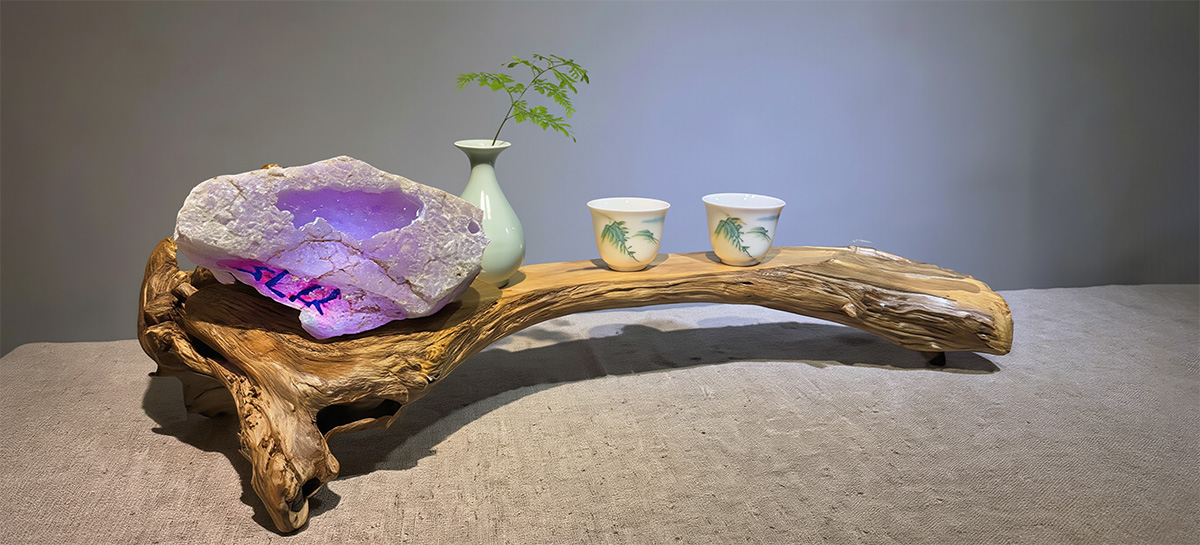
The world’s high-quality jadeite is primarily produced in the Myitkyina region of northern Myanmar, which accounts for more than 90% of global jadeite production.
II. Jadeite Deposits
These are divided into primary and secondary deposits.
Primary deposits are also known as “new pit jade without skin,” while secondary deposits consist of jadeite raw material with skin that has formed through long-term weathering and various external stresses after the jadeite was originally formed. The vast majority of high-quality jadeite comes from secondary deposits. Secondary deposits are further classified into residual-colluvial deposits, terrace deposits, and modern alluvial deposits.
Classification of Jadeite Rough
1. Mountain Material, Originating from primary jadeite deposits, it lacks a weathered skin, allowing the quality of the texture to be directly observed. The mineral crystal grains are generally coarse, with poor transparency; it is mostly block-like material, and high-quality specimens are rare.
.jpg)
2. Mountain Stone, Primarily sourced from residual-colluvial deposits, which are located within the residual-colluvial layers of primary jadeite deposits. These stones have undergone mechanical weathering and short-distance transport, resulting in angular shapes and a relatively thin weathered outer skin.
.jpg)
3. Half-Mountain, Half-Water Stones: These originate from terrace deposits. They exhibit a certain degree of rounding, are of relatively good quality, and feature a layer of weathered skin. Primary colors include black, white, yellow, and red.
.jpg)
4. Water Stones, These are found in alluvial deposits in riverbeds. They appear as pebbles, are round and flat in shape, and have a very thin skin; in some cases, the skin is so thin it is virtually imperceptible. These stones are generally of good quality.
.jpg)
The jadeite with a weathered crust discussed in this article refers to jadeite pebbles mined from riverbeds, mountain slopes, and conglomerates that possess a weathered outer crust; these are also known as “zi material”. If the crust of a piece of jadeite “zi material” is well-developed, its banding is also distinct, consisting of the outer crust, the “mist” (middle band), and the jade flesh (inner band).
The skin is a crucial aspect of jadeite appraisal; by examining the skin of a rough stone, one can infer its internal color and fissures—a method commonly known as “skin reading”. When jadeite exhibits green stripes or bands, these are also reflected as stripes and bands on the skin. If the skin is white, it indicates that the jadeite’s chemical composition is relatively pure and unlikely to contain elements such as Cr (chromium), Ca (calcium), Mg (magnesium), Fe (iron), and other elements. A yellow or brown skin suggests the presence of impurities such as Cr (chromium), Ca (calcium), Mg (magnesium), and Fe (iron) inside, and the likelihood of the interior being green is higher. If the jadeite contains fissures, these will also be reflected on the skin.
III. Formation and Characteristics of the Skin on Raw Jadeite
The skin is a weathered layer formed on jadeite during transportation through processes such as erosion and weathering. Its characteristics are often closely related to the quality of the jadeite’s interior. By observing the skin’s coarseness, uniformity, density, and flaking patterns, one can assess the internal texture of the jadeite.
Characteristics of the Skin
(1) Coarseness of the Skin
1. Chaff-like skin: Resembling the outer shell of rice husks, it is elongated, columnar, or fibrous in shape, porous, spongy, and has an interwoven structure. Its color ranges from yellow to yellowish-brown. Based on particle size, it is further classified into coarse, medium, and fine chaff-like skin.
.jpg)
2. Salt-like husk: Resembling coarse salt dried from seawater, with a grain size smaller than that of fine husk.
.jpg)
3. Powdery skin: This skin consists of powdery sand-like particles and is often grayish-white or yellow in color; it is also known as “lime skin.”
(2) Firmness of the Skin
Jade with loose skin often has a thick weathered layer on the surface and a rough texture. Rubbing it with your fingers causes sand-like particles to fall off, indicating that the jade’s body is relatively coarse and typically lacks transparency.
In jade with a tight skin, the outer layer has a dense and solid structure; the skin cannot be rubbed off with the fingers and is even difficult to scrape off with a knife, indicating that the jade’s core has a dense texture and is composed of jadeite rock—though other factors must also be considered.
(3) Grain Pattern of the Skin
If the grains on the surface are straight or slanted, appearing jagged and crisscrossed when viewed from the side, with sharp, thorn-like tips, rubbing it with your fingers will feel rough. If this is combined with a tight skin, your fingers may feel a stinging sensation or even be cut—this may indicate good transparency.
In the Burmese jade trade, dealers use the following mnemonic for evaluating the skin: coarse sand, coarse jade; fine sand, fine jade; uniform sand, uniform jade; clean sand, clean jade; chaotic sand, fuzzy base; raised sand, bright base; hard sand, firm base; bubbly sand, tender base; flat sand, woody base.
“Coarse sand, coarse jade; fine sand, fine jade; even sand, even jade”—this refers to how the size and distribution of grains affect the evaluation of a rough stone. “Clean sand, clean jade” refers to the impact of impurities: if the sand appears clean, the jade portion will also be relatively clean. “Disordered sand with a fuzzy base” refers to how the arrangement of grains affects the jade portion. “Sand that reveals a bright base” and “hard sand with a firm base” indicate that the jadeite grains have good crystallinity. the jade flesh of the jadeite rough will have relatively good underlying quality; if the sand is “flipped,” transparency is strong; otherwise, it is poor. “Sand bubbles with a tender base” refers to a situation where the grains are loosely arranged and not tightly packed; generally, the stone’s “zong” will be relatively tender, whereas the opposite indicates an “old” zong. “Woody sand with flat grains” refers to fine, flatly arranged grains that are mostly granular in shape with average crystallinity. In such cases, the jade’s underlying quality is often poor, lacking transparency, and the “Zong” is tender; conversely, the underlying quality is good.
IV. Types of Skin
Taking the classification by Mr. Jiang Zhencheng—author of *Jadeite Rough Stone Journey* and a veteran with extensive practical experience in jadeite—as an example, his categorization based on the texture, color, source, and appraisal indicators of gravel-skin jadeite holds significant practical value.
Yellow Salt Sand Skin—The term “salt” here refers to a lime-like substance. The yellow outer layer reveals yellow sand grains. In high-quality yellow salt sand skin, the surface sand grains appear to stand upright; to the touch, it resembles a lychee shell, with grains of uniform size and even distribution, indicating that the internal jadeite texture is distinct yet uniform, with good transparency.
White Sand Skin—The skin is thin and clear; the stone’s surface is yellow, but turns white after being brushed.
White Salt Sand Skin—This is conceptually the same as Yellow Salt Sand Skin, differing only in color; it is considered a top-grade variety among White Sand Skins.
Black Sand Skin—The skin is jet-black, and this type is abundant.
Red Salt Sand Skin—It appears red or yellowish-red, with a pale yellowish-red hue.
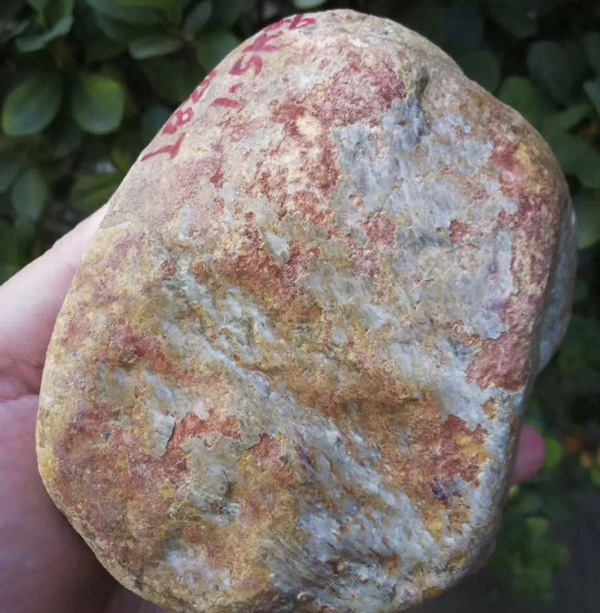
Water-Washed Sand Skin—The skin has patches or streaks of pale yellow or grayish-white; a few may appear yellow-black or grayish-yellow, but the sand texture must be evenly distributed.
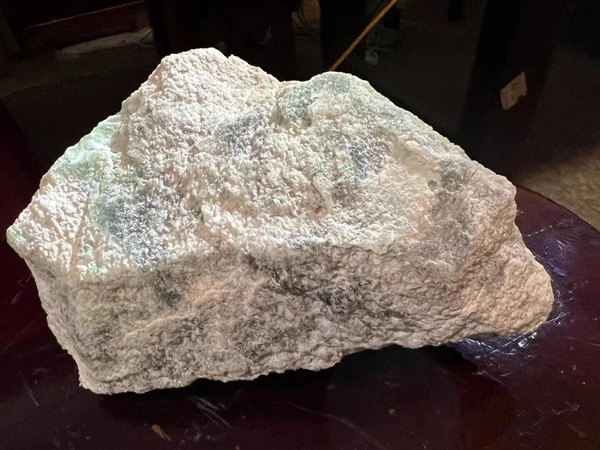
Yangmei Sand Skin—The surface sand grains resemble fully ripe yangmei berries, dark red in color; some may also be interspersed with red and yellow or red and white.
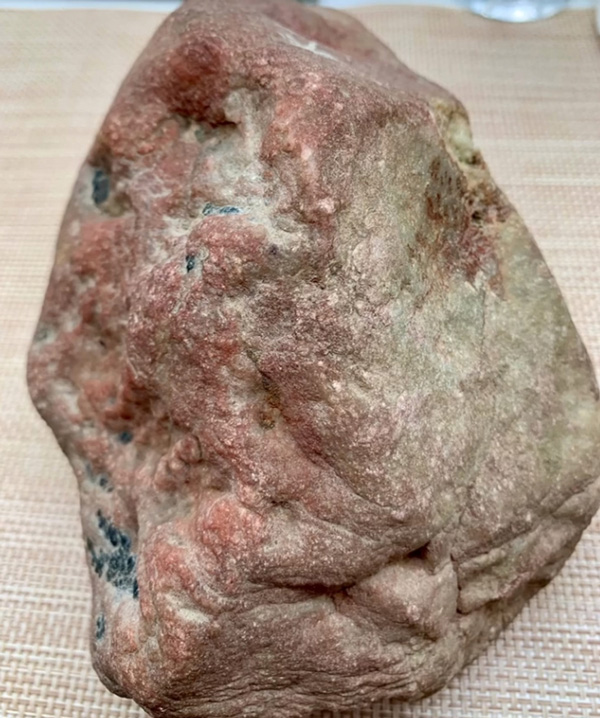
Yellow Pear Skin—The skin resembles a yellow pear and is slightly translucent.
Bamboo Shoot Leaf Skin—Yellowish-white, thin skin with a translucent appearance.
Cured Meat Skin—Water-polished stone with a skin as red as cured meat, smooth and translucent.
Old Elephant Skin—Grayish-white, appearing aged and wrinkled, rough, and resembling elephant skin. It appears sand-free but feels rough to the touch.
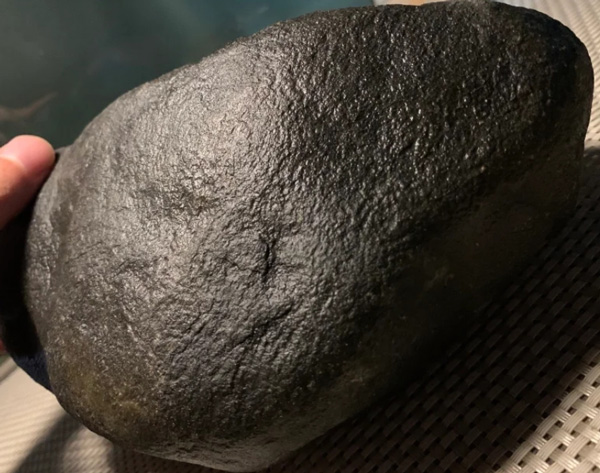
Lime Skin—The surface resembles lime; removing this layer typically reveals a white sandy skin.
Rust-Colored Skin—Rust-colored, typically reddish-yellow, with patches of reddish-yellow.
Deneka Skin—The outer skin has very fine grit, is thick and cracked, resembling the bark of a Deneka tree; it looks loose but the actual flesh is fine-grained.
Grit-Shedding Skin—The outer skin easily sheds grit; it is mostly yellow or reddish-yellow.
Tree Frog Skin—The outer skin resembles that of a tree frog: thin and smooth, free of grit with a waxy coating, and translucent.
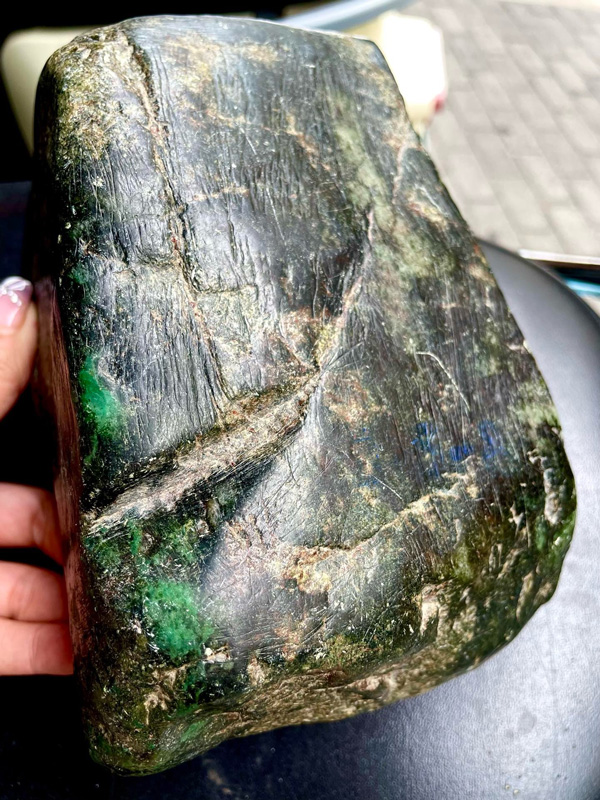
Potato Skin—The skin is thin and slightly yellow, shaped like a potato, with a translucent appearance.
Here, we’ll discuss Black Wusha Skin
Mountain stones with jet-black outer skins, as well as black and gray rough stones, are collectively referred to as Black Wusha. The quality of Black Wusha varies greatly. Currently, small rough stones mined from conglomerate rock usually have black outer skins, Chinese buyers are often at a disadvantage when it comes to Black Wusha stones. Some rough stones we see along the China-Myanmar border are Black Wusha stones; for example, rough stones sold by weight or for 1,000 each are mostly Black Wusha stones. Many people buy them for a few hundred yuan just to play around with them, but 99% of them turn out to be worthless. These stones come from the Huika mining site and are mostly of poor quality.
.jpg)
How to Select Black Wusha Skin
Examine the maturity of the black sand: check for a waxy skin, whether the skin is thick, if any parts have peeled off, and whether the sand grains are fine, dense, and uniform in grayish-white color. If the crystalline sand grains in the skin are consistent in size—not fluctuating wildly—the base quality may be better, and the jadeite grade may be high. If it features “pine flower” or “python” patterns, it’s worth taking a chance. However, if the skin is thin, the color is dark, and the structure is tightly packed, the jadeite is likely immature with a poor base quality; it’s best to avoid purchasing it.
The characteristics of jadeite rough’s skin are quite complex and cannot be fully captured by a simple description. In nature, no two stones are exactly alike. Many stones exhibit a composite appearance with multiple types of skin. Stones with identical skin appearances can be found in different mining sites, and even within the same site, stones may have varying skin appearances. This makes it difficult to determine the mining site based solely on skin characteristics, just as it is difficult to infer skin characteristics based solely on site features. This can easily lead to errors in evaluating the rough stone. Therefore, the skin is only one aspect; a comprehensive evaluation must be made by combining indicators such as python bands, pine flower patterns, and mottling.
-560x560.jpg)
-560x560.jpg)
-560x560.jpg)
-560x560.jpg)
-560x560.jpg)
-560x560.jpg)
-560x560.jpg)
-560x560.jpg)